Who Owns Your Family Tree Data?
Do you really own your family tree data? Learn how genealogy platforms use your data, your rights, and how to stay in control.
You might think your family tree belongs entirely to you.
After all, you created it. You added the names, the dates, the photos, and the stories.
But here’s the uncomfortable question:
Do you actually own your family tree data once it’s on a genealogy platform?
The answer isn’t always as straightforward as it seems. Many platforms have terms that allow them to use your data in ways most users never fully realize.
Terms of Service Explained #
When you sign up for a genealogy website, you agree to its Terms of Service, often without reading them in detail.
Platforms like Ancestry and MyHeritage typically state:
- You retain ownership of the content you upload
- But you grant the platform a license to use that data
This license can include:
- Storing and processing your data
- Displaying it to other users
- Using it to improve their services
The key detail is this:
Ownership and control are not the same thing.
Even if you “own” your data, the platform may still have broad rights to use it.
Can Platforms Use Your Data? #
In most cases, yes.
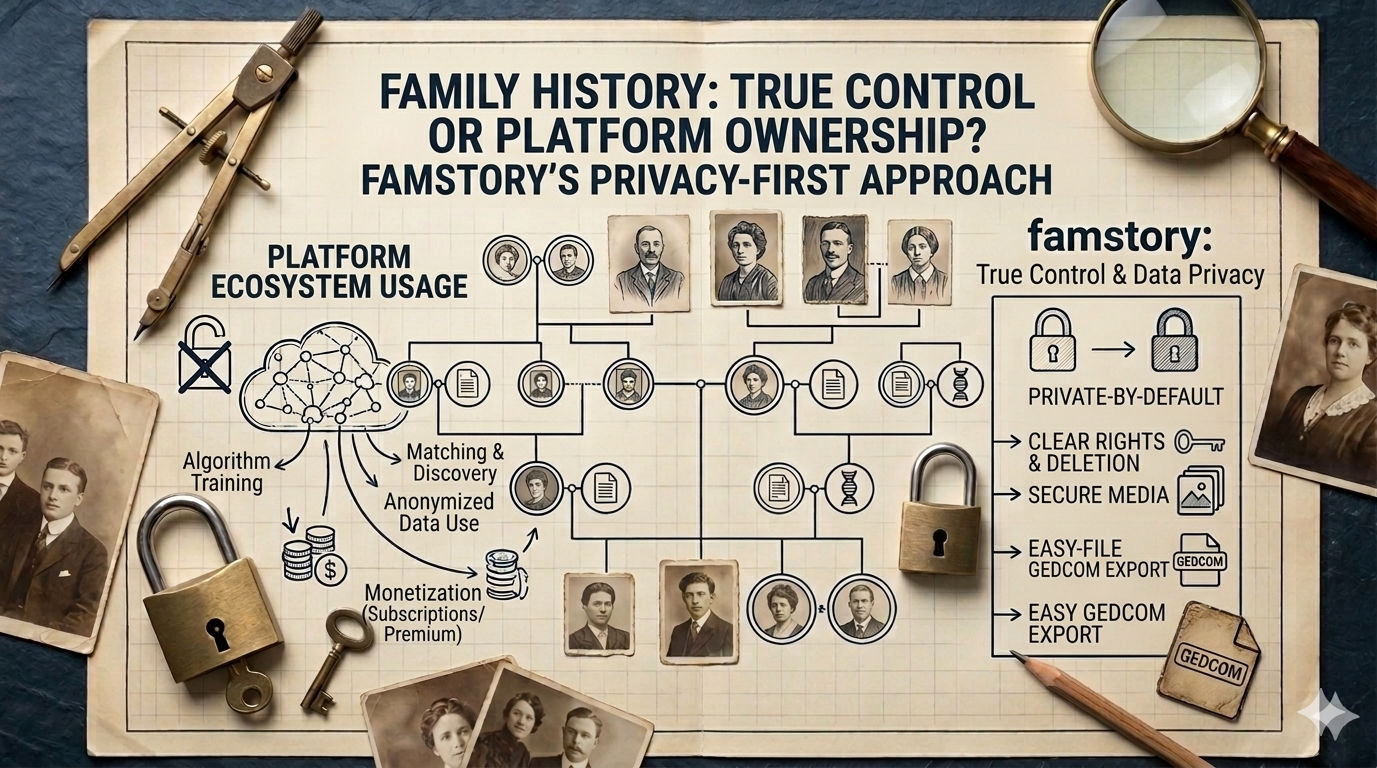
Genealogy platforms rely heavily on user data to function. Your information may be used for:
Matching and discovery #
- Connecting you with other users
- Suggesting relatives and historical records
Platform improvements #
- Training matching algorithms
- Expanding databases
Internal analysis #
- Understanding user behavior
- Improving features and recommendations
This doesn’t automatically mean your data is being misused, but it does mean your data is actively part of the platform’s ecosystem.
If you're concerned about visibility, it’s worth understanding how public your tree might be:
👉 Is Your Family Tree Public?
Monetization & Data Use #
Most genealogy platforms are businesses and your data plays a role in how they operate.
Common monetization approaches include:
- Subscription models for access to records
- Premium features and advanced matching
- Large-scale data analysis to improve services
In some cases, platforms may also:
- Use aggregated data for research
- Partner with third parties in anonymized ways
The challenge is transparency.
Users often don’t have a clear picture of:
- how their data is used
- how long it is stored
- what happens after deletion
This lack of clarity is what raises concerns around data ownership.
Exporting Your Data #
One of the most important questions you can ask is:
Can you take your data with you?
Most platforms allow some form of export, typically:
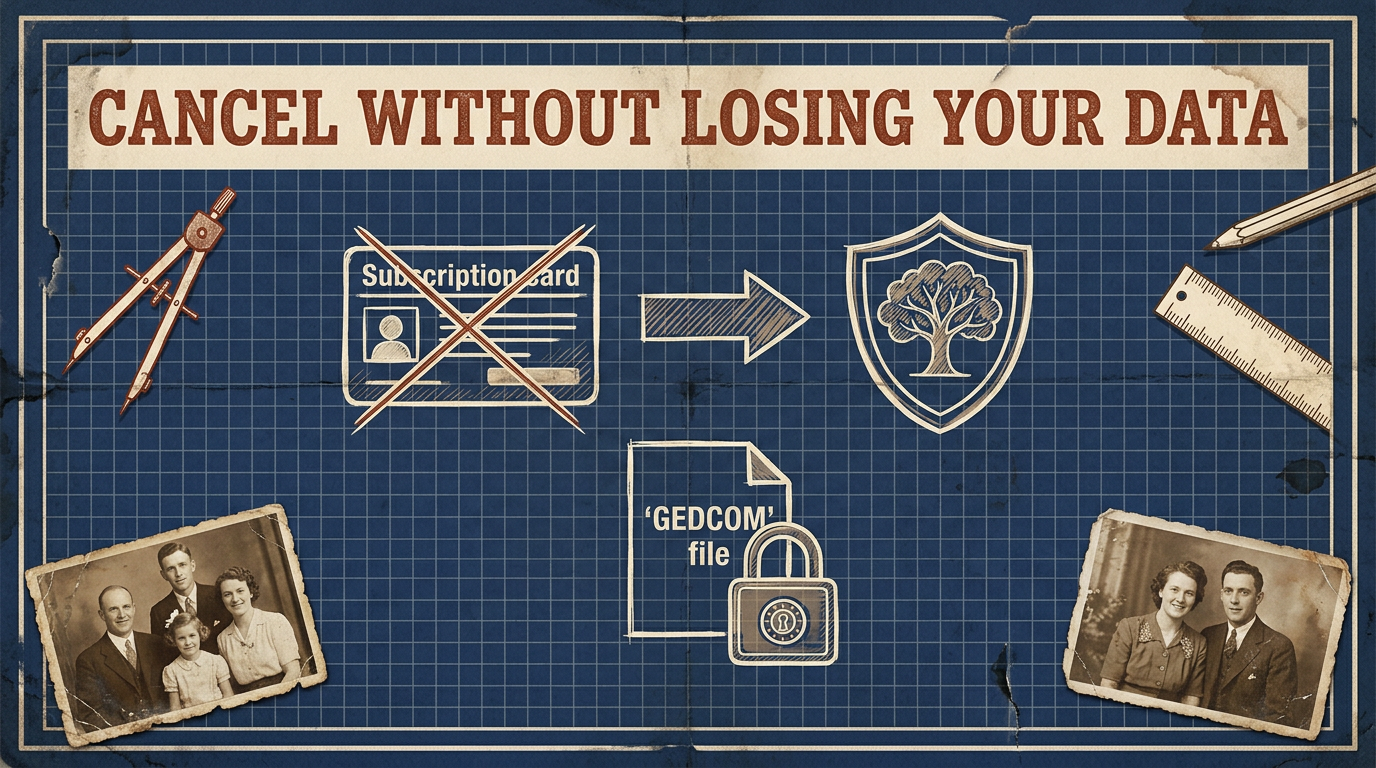
- GEDCOM files (standard for family trees)
- CSV or other structured formats
However, limitations can apply:
- Not all data may be included
- Media files (photos, documents) may require separate downloads
- Re-importing into another platform may not be seamless
Exporting your data is your main way of regaining full control.
If you're unsure how to handle GEDCOM files securely, see:
👉 How to Keep Your Family Tree Private Online
Choosing a Platform with Full Ownership #
If data ownership matters to you, it’s worth choosing a platform that prioritizes control and transparency.
Look for:
- Clear ownership terms
- No hidden data-sharing practices
- Easy export and deletion options
- Private-by-default storage
Platforms like famstory are built around the idea that your family history should remain yours, fully and without compromise.
That means:
- no public exposure by default
- no hidden visibility layers
- full control over access and sharing
If you’re still evaluating how visibility and ownership connect, start here:
👉 Is Your Family Tree Public?
Conclusion #
Your family tree may feel personal, but once it’s uploaded to a platform, the rules can change.
Even if you technically retain ownership, you’re often sharing control with the platform itself.
That’s why it’s important to understand:
- what rights you grant
- how your data is used
- whether you can take it back
With the right platform and a clear understanding of ownership, you can keep your family history where it belongs, with you.
FAQ #
Do I own my tree data? #
In most cases, yes you retain ownership. However, platforms often receive a license to use your data, which limits your control.
Can platforms sell my info? #
Most platforms don’t sell personal data directly, but they may use it for internal purposes, research, or aggregated analysis.
How do I move my data to another platform? #
You can usually export your tree as a GEDCOM file and import it into another service. Be aware that some data (like photos) may need to be transferred separately.