Is DNA Testing Safe for Genealogy?
Is DNA testing safe for genealogy? The real risks aren't just hacks — they're relative matching, third-party sharing, and consent you can't give.
An at-home DNA test feels harmless. You order a kit, spit in a tube, and a few weeks later you get an ethnicity breakdown and a list of relatives.
So when people ask is DNA testing safe, they usually mean one thing: will my data get hacked?
That's the wrong question — or at least an incomplete one.
A DNA test can be perfectly secure and still not be private. The biggest risks with genetic data don't come from a breach. They come from the way the service works when everything is going exactly as intended.
"Safe" and "Private" Are Not the Same Thing #
We've made this distinction before for genealogy websites in general, and it matters even more for DNA.
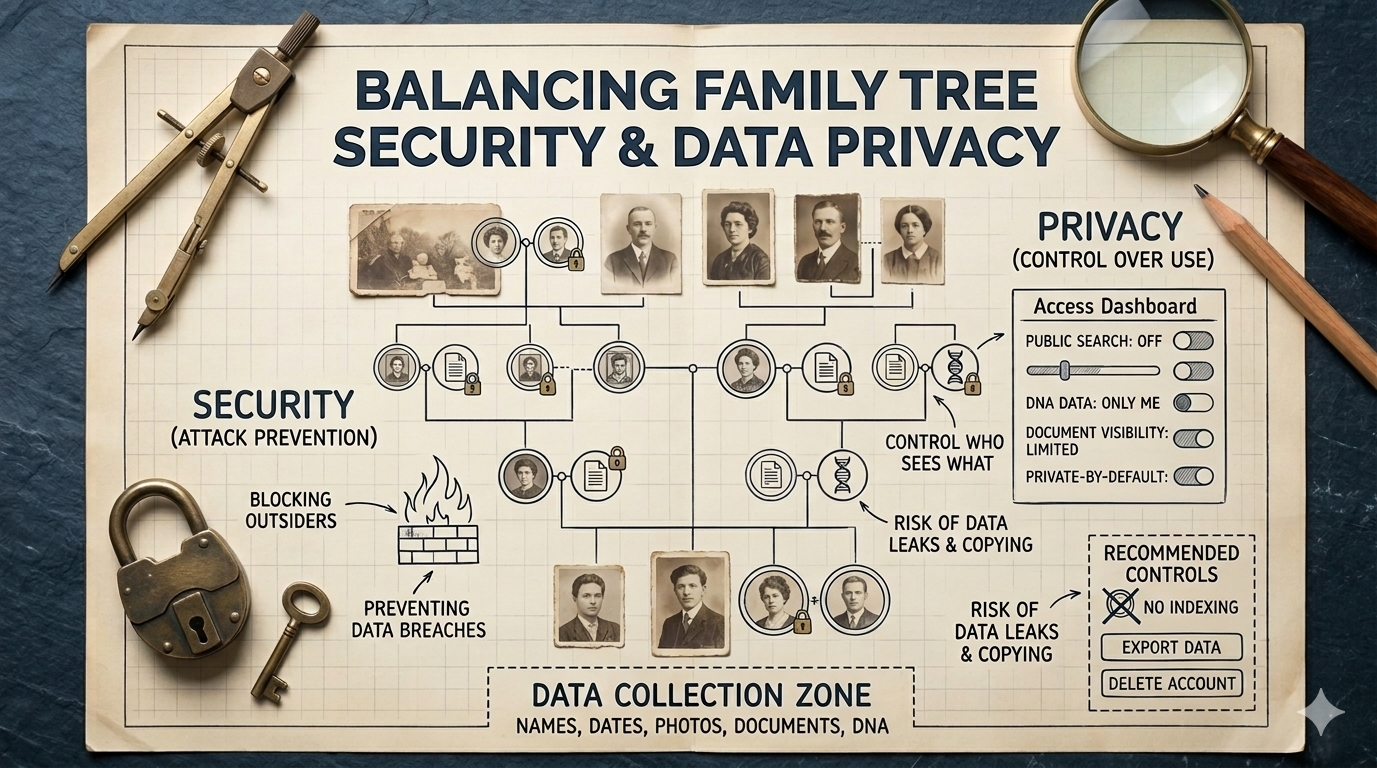
Safe is a technical question: is your data encrypted, are the servers protected, can an outsider break in?
Private is a different question entirely: who is allowed to use your data, what are they allowed to do with it, and how much control do you actually keep?
A testing company can invest heavily in security — encryption, audits, the works — and your genome can still be matched against strangers, shared with research partners, and treated as a business asset. None of that requires a hacker. It's the normal operation of the service, spelled out in terms almost nobody reads.
The Real Risks Aren't Hacks #
Here's what actually deserves your attention before you mail off a sample.
Relative matching. This is the feature people sign up for — finding cousins, confirming a line. But it works by comparing your DNA against everyone else in the database. That means your genetic information is being cross-referenced with strangers by default, and some of those "strangers" are blood relatives who never tested themselves.
Third-party and research sharing. Depending on the company and the boxes you ticked at signup, your data may be shared — often de-identified, often opt-in — with research or pharmaceutical partners. "De-identified" is not the same as anonymous. Genetic data is inherently identifying; it's the code that makes you you. Policies here change, so it's worth checking the current terms of any provider before you assume anything.
Consent you can't actually give. This is the part that makes DNA different from almost any other data. When you upload your genome, you're also exposing information about people who share it — your children, siblings, and parents share large portions of the same code. They never signed up. They may not even know. A single match can pull a whole family into a database that only one person agreed to.
None of this is hidden. Most of it is right there in the fine print. The gap is the same one we described in What Happens to Your DNA Data After a Genealogy Test?: the terms are long, the "I agree" button is easy, and the consequences are permanent.
Why "Permanent" Is the Word That Matters #
If a password leaks, you change it. If a card number is stolen, the bank issues a new one.
You cannot reissue your genome. A compromised or over-shared DNA profile stays compromised — for you and for the relatives it implicates.
That's not a reason to panic. Plenty of people test, weigh the trade-offs, and are fine with them. It's a reason to be deliberate: understand what a test really exposes and who it exposes it for, before you take it, not after.
You Can Do Serious Genealogy Without a DNA Test #
Here's the part that often gets lost in the DNA conversation: you don't need a genetic test to build a real, deep family history.
Records, census data, church books, immigration files, documents, photos, and the memories of living relatives are the actual foundation of genealogy. DNA is an add-on, not the core. If your tree is set to public somewhere, it's also worth understanding how visible your family data already is — privacy isn't only about your genome.
That research deserves a home that keeps it yours — private by default, not part of anyone's matching network or research dataset. That's the idea behind end-to-end encrypted family tree storage: no public profiles, no genome to leak, just your family's history under your control. famstory is built around exactly that. (To be clear: famstory doesn't offer DNA tests — it's the private place your research lives.)
So is DNA testing safe? Technically, often yes. Private — that's the question worth asking first.
FAQ #
Is DNA testing safe for genealogy? #
It's usually secure in the technical sense, but "secure" doesn't mean "private." The main risks are relative matching, third-party sharing, and the fact that your results expose data about relatives who never consented.
Are at-home DNA tests safe to take? #
The test itself is safe. The open question is what happens to your data afterward — how it's stored, who it's shared with, and what happens if the company is sold or breached. Read the current terms before you test.
Can I do genealogy without a DNA test? #
Yes. Records, census data, church books, documents, and interviews with living relatives are the real foundation of family history. DNA is optional, not required.